Block Puzzle Games: How They Work and Which Ones to Play
How block puzzle games work, why combo scoring changes the way you play, and the block, sort and merge puzzles worth playing in your browser.
By Rovixel Team · Published · Updated
Block puzzle games all come from the same idea: pieces arrive, you place them on a grid, and completed rows or columns disappear. The difference between a good one and a forgettable one is what happens around that loop — how pieces are chosen, what clearing a line is worth, and whether a mistake ends your run or just slows it down.
The three-piece model
The modern block puzzle gives you three pieces at a time and refills only when all three are used. That single rule is why the genre works: you cannot discard a piece you dislike, so a run is a sequence of compromises rather than a series of optimal moves. The board fills up not because you played badly in one moment but because of a decision you made ten moves ago.
Our own Block Cascade uses this model on a tall board with combo scoring. It also adds a single-step undo that recharges after three line clears — a small change with a large effect, because it turns the worst kind of loss (a misdrop that ends a good run) into a setback you can recover from.
Why combo scoring changes how you play
In a flat-scoring block puzzle, the right move is always the one that clears the most lines. Combo scoring inverts that: when the second line you clear in a single move is worth more than the first, the correct play is often to hold a nearly-complete row and look for a piece that finishes two lines at once. You stop playing for space and start playing for setup.
That is the moment the genre gets interesting, and it is the reason Block Cascade’s tips are about structure — fill rows from the edges inward, save long pieces for boards that are already half full — rather than about speed.
The other kinds of puzzle that scratch the same itch
Not every grid puzzle is a block-clearing game, and some players who bounce off the falling-pieces version prefer the quiet ones:
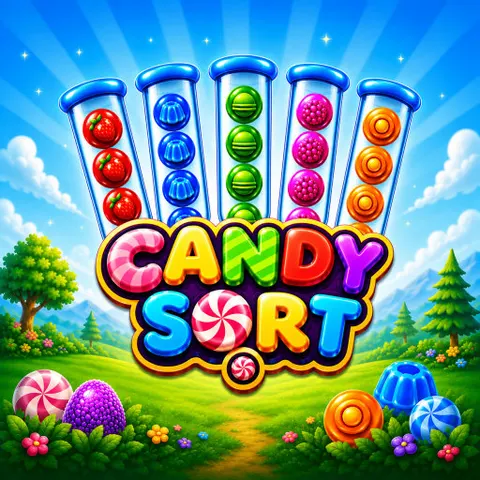
- Tube and colour sorting. Candy Sort asks you to move candies until every tube holds a single colour. There is no timer, which makes it a thinking puzzle rather than a reaction one.
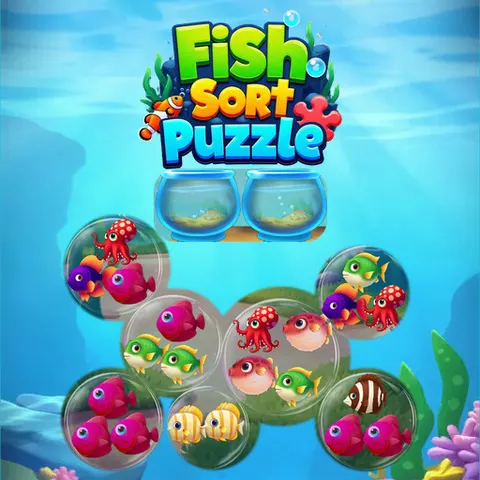
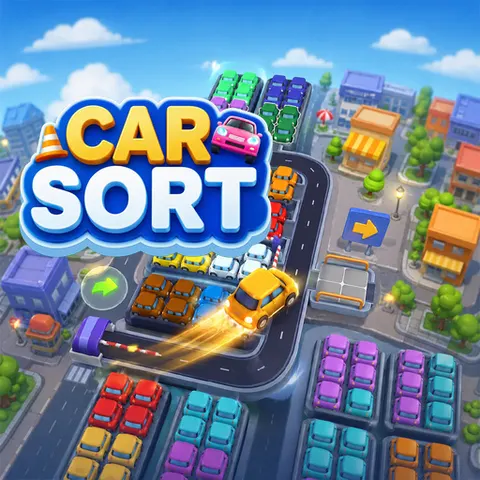
- Logistics sorting. Fish Sort Puzzle and Car Sort apply the same idea to tanks and parking lots: clear three at a time, release what is blocked, and undo your last move when you commit too early.
- Merging. Wild Fusion skips the clearing entirely: matching animals combine into bigger species, and the grid fills from your own greed rather than from arriving pieces.
- Board games. Tic Tac Toe is the smallest grid puzzle there is, and the one where the computer plays perfectly on the hardest level.
Five habits that work in every block puzzle
- Keep the centre open. Edges and corners are easy to fill later; the middle is where long pieces need room to land.
- Do not clear a line just because you can. If a nearly-complete row is holding space you need, finishing it is a legitimate move. If it is holding space you do not need, leave it.
- Count what is left, not what you have placed. A board is lost when the remaining empty squares no longer fit the shapes still in the tray.
- Watch the tallest column. It ends runs before the middle does, because it removes the vertical space that long pieces need.
- Use the undo deliberately. In games that offer one, spending it early to preserve a good board is usually better than saving it for a disaster that never comes.
Where to play
The puzzle category collects the grid, sorting and merge games on the site; the sorting tag filters to the tube-and-tray puzzles, and the relaxing tag is where the no-timer ones live. If you want the longer version of this genre, Block Cascade is the one we built ourselves, and it is the one whose scoring rewards planning two moves ahead rather than reacting to what arrives.